


كل قطعة تخبرك من أين أتت.
تستند بوهيميا رويال كريستال إلى أصل يمكن تتبعه، وعملية حرفية موثقة، ومواد تتحدث عن نفسها.
ماذا يعني ولماذا هو مهم
المنشأ يعني إمكانية تتبع أصل الشيء والتحقق منه. بالنسبة للكريستال، يعني ذلك معرفة البلد الذي تم إنتاجه فيه، وورشة العمل التي صنعته، والطريقة المستخدمة في إنهاءه.
معظم الأواني الزجاجية التي تباع اليوم لا تحمل أيًا من هذه المعلومات. يغيب بلد المنشأ. العملية غير محددة. المواد موصوفة بمصطلحات يصعب التحقق منها. لا شيء من ذلك هو الحال هنا.
لكل قطعة من بوهيميا رويال كريستال أصل يمكن تتبعه. يأتي الكريستال من جمهورية التشيك. يتم الانتهاء يدويًا في ورش عمل تعمل ضمن التقاليد البوهيمية لأجيال. يمكننا أن نخبرك أين صنعت، وكيف صنعت، ومما صنعت. هذا هو ما يعنيه المنشأ في الواقع.
صنع في جمهورية التشيك
تعد منطقة بوهيميا في جمهورية التشيك هي المنشأ الجغرافي لإنتاج الكريستال الأوروبي. وهذا ليس اسم علامة تجارية أو وصفًا تسويقيًا، بل هي منطقة محددة ذات تاريخ موثق في صناعة الزجاج يعود لأكثر من خمسمائة عام.
إن الظروف التي جعلت بوهيميا مركزًا لإنتاج الكريستال، وهي المواد الخام الغنية بالسيليكا، والمياه النقية من المعادن، والغابات الكثيفة التي وفرت الوقود للأفران، هي حقائق جغرافية. وهذا هو السبب في تطور الحرفة هناك وبقائها في هذه المنطقة.
يتم إنتاج كل قطعة في مجموعة بوهيميا رويال كريستال في جمهورية التشيك. ولا تزال الورش موجودة في المنطقة، ويتم تدريب الحرفيين ضمن نفس التقاليد. عندما نقول كريستال بوهيمي، فإننا نعني ذلك بالضبط.
ثلاثة أشياء تميزه عن غيره
يُصنع الكريستال البوهيمي من مزيج معدني خاص أتقنه صانعو الزجاج التشيكيون على مر الأجيال. وهو أكثف من الزجاج العادي، مما يمنحه وزنه وقدرته على الاحتفاظ بحافة مقطوعة بدقة. عندما يمر الضوء من خلاله، يكون الانكسار حادًا ومنشورًا. هذه خاصية للمادة، وليست تشطيبًا.
في القطع التي يُطبق فيها الذهب، يكون الذهب من عيار 22 قيراطًا. يتم صهره مباشرةً في سطح الكريستال في درجة حرارة عالية بواسطة حرفي متمرس. هذه ليست طبقة طلاء معدنية توضع فوق السطح وتتآكل. وليست طلاءً كهربائيًا يستخدم تيارًا صناعيًا لترسيب طبقة رقيقة جدًا يمكن أن تتآكل في النهاية. الذهب في قطعة بوهيميا رويال كريستال ملتصق بالسطح. لا يتشقق، ولا يتكسر، ولا يفقد بريقه.
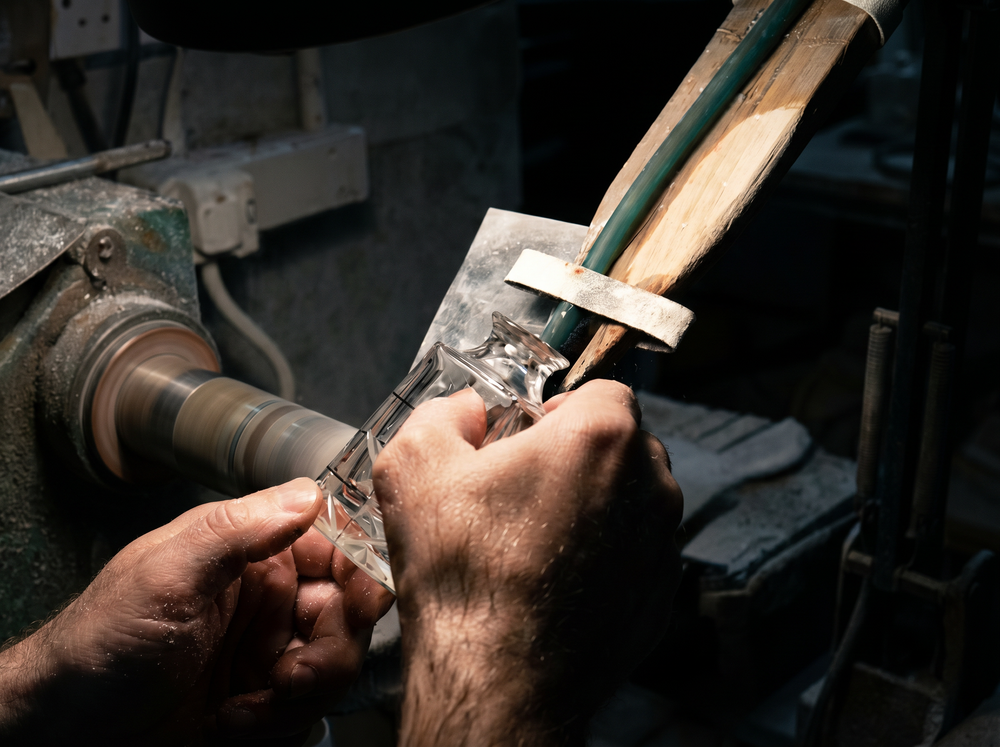
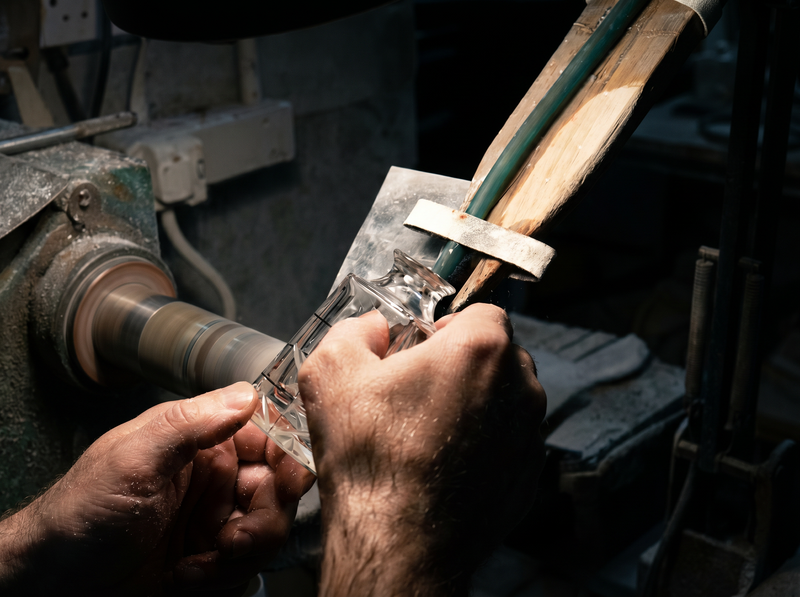
تُقطع كل قطعة يدويًا على عجلة دوارة. يتحكم الحرفي بشكل كامل في زاوية كل تمريرة وضغطها ومدتها. لا يوجد قالب للقطع. يقرأ الحرفي البلورة أثناء عمله ويعدلها في الوقت الفعلي. لهذا السبب تعكس البلورات المقطوعة يدويًا الضوء بشكل مختلف عن الزجاج المقطوع آليًا. الحواف أكثر حدة، والأوجه أكثر تنوعًا، ولا توجد قطعتان متطابقتان.
يتم شحن منحوتات الأسلحة مع إثبات
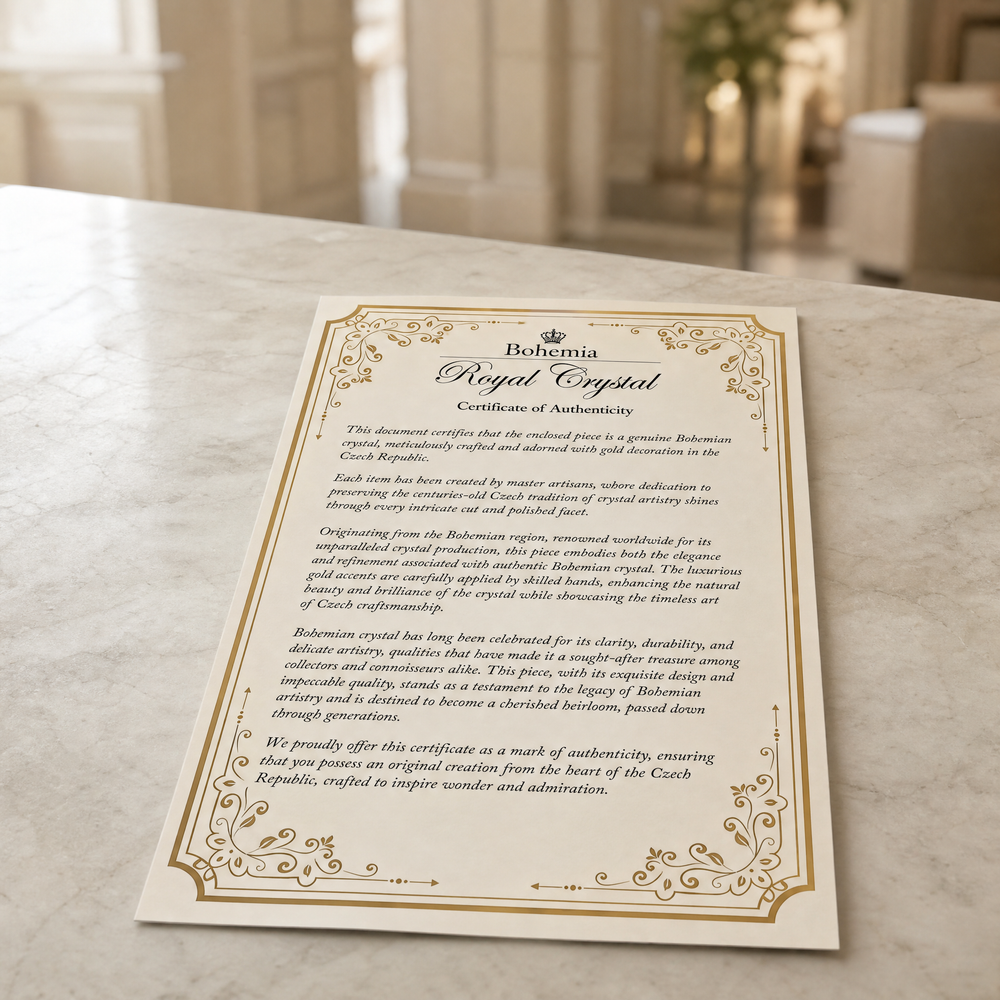
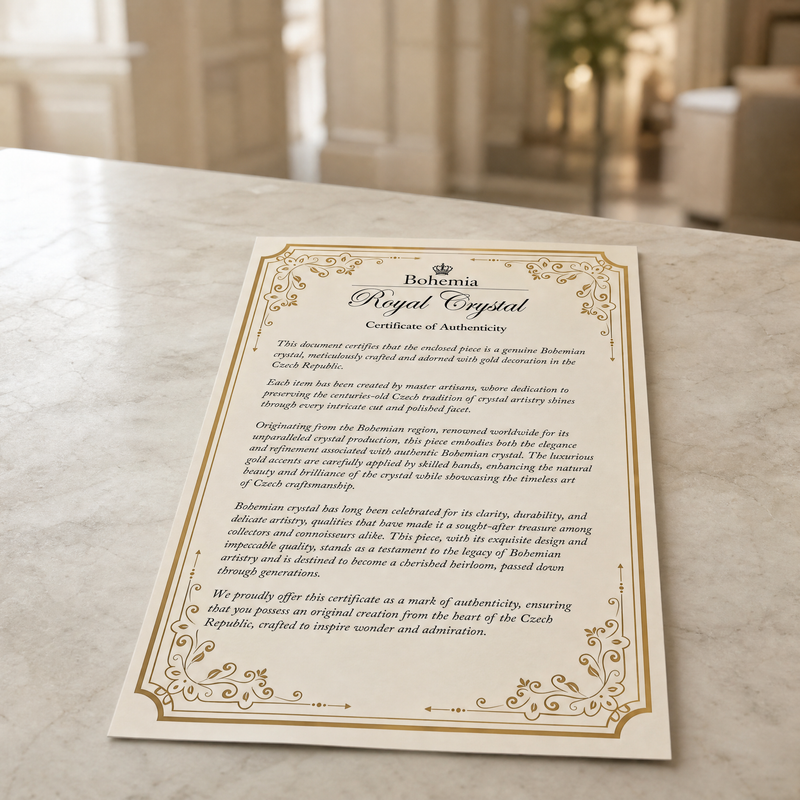
يتم شحن كل قطعة في مجموعة منحوتات بوهيميا رويال كريستال على شكل مسدس مع شهادة أصالة. تذكر الشهادة الأصل والمواد وطريقة الصناعة. وهي تحمل ختمًا ومرجعًا تسلسليًا مرتبطًا بالقطعة الفردية.
الشهادة ليست مادة تغليف. إنها وثيقة تؤكد ما حصلت عليه. عند الإهداء، يتلقى المستلم شيئًا إلى جانب القطعة. بالنسبة لهواة الجمع، إنها السجل الورقي الذي يرافق القطعة بمرور الوقت.
تصل المنحوتات أيضًا في صندوق عرض مصنوع يدويًا من خشب الجوز الداكن بداخل مخملي وزوج من قفازات التعامل القطنية البيضاء. تم تصميم طريقة العرض بحيث تكون التجربة الأولى للقطعة مدروسة، وليست مجرد فكرة لاحقة.
أربع طرق لمعرفة ما لديك
يتمتع الكريستال البوهيمي الأصلي بخصائص فيزيائية ثابتة وقابلة للتحقق. هذه الخصائص ليست ذاتية. يمكنك اختبارها بنفسك عند وصول قطعتك.
الكريستال البوهيمي الأصلي أثقل بشكل ملحوظ من الزجاج العادي. تركيبته المعدنية تمنحه كثافة تشعر بها فورًا عند التقاطه. إذا كانت القطعة خفيفة بالنسبة لحجمها، فالمادة على الأرجح زجاج عادي وليست كريستال.
امسك القطعة باتجاه مصدر ضوء. يقسم الكريستال الأصلي الضوء إلى طيف منشوري حاد. ينتج الزجاج العادي انكسارًا باهتًا وأقل تحديدًا. الفرق مرئي وفوري.
مرر إصبعك بحذر على طول الحافة المقطوعة. يتميز الكريستال المقطوع يدويًا بحافة واضحة وغير منتظمة قليلاً تعطي إحساسًا بالدقة ولكن ليس الميكانيكية. بينما يتميز الزجاج المقطوع آليًا بحافة موحدة وناعمة يمكن أن تبدو مستديرة قليلاً. إن عدم انتظام الحافة المقطوعة يدويًا هو مؤشر جودة وليس عيبًا.
انقر على حافة كأس كريستال أو إبريق برفق بظفرك. ينتج الكريستال الأصلي رنينًا واضحًا ومستمرًا يستغرق لحظة ليختفي. ينتج الزجاج العادي صوتًا مسطحًا وقصيرًا بدون نغمة مستمرة. الفرق واضح.
تم الاختيار على أرفع المستويات
المنشأ لا يتعلق فقط بالمكان الذي أتت منه القطعة، بل يتعلق أيضاً بالمكان الذي تم استلامها فيه. فقد تم اختيار قطع بوهيميا رويال كريستال كهدايا على أعلى مستويات الإهداء الخاص والحكومي، من قبل أشخاص ومؤسسات تتحقق من مقتنياتها.
اشترِ بثقة.
أنت تعرف مصدرها ومكوناتها وكيف تتحقق منها عند وصولها. الشيء الوحيد المتبقي هو اختيار القطعة.
